Mutants Genetic Gladiators
- 3.9
- Rating
- 10.00M
- Installs
- Free
- Price

 Analysis by App-foxy
I went into Mutants Genetic Gladiators expecting a straightforward creature-battling game, but its appeal comes from the way several small systems keep pulling me back. I breed and train mutants, assemble a squad, and send that team into fights where the right combination matters more than simply tapping quickly. The presentation has a colorful comic-book edge, while the action stays focused on planning, lineup choices, and gradual improvement.
This is a free action game from Celsius online, available for players who enjoy collecting and developing a roster over time. It has been installed over ten million times and holds a 3.9 average from around 586 thousand ratings, which gives a useful picture of its position: clearly popular, but not universally loved. I understand that balance. There is plenty to do without paying immediately, yet the long-term structure can feel demanding if you prefer a game that gives you everything at once.
The game is rated Teen, runs on Android 8.0 and later, and its current version is 76.802.172880. I would recommend trying it if you like squad-building games with a mutant theme, but I would not choose it for a short, self-contained action experience. Its best qualities appear after I spend time learning the roster and noticing how breeding, training, and battle preparation affect one another.
You May Also Like

 Blood Strike: 2.5 Anniversary
Blood Strike’s Loadouts Turn Every Drop Into a Tactical Gamble
A close look at Blood Strike’s custom loadouts: how fast access to signature weapons reshapes its battle royale rhythm, rewards preparation, and narrows the gap between fights.

 Pandora - Music & Podcasts
Pandora’s Music Is Easy to Start, but Harder to Recover
Pandora’s strength is its low-effort path from a seed to a station. Its weak spot is how much confidence it asks you to place in connection, setup, and quiet recovery.

 8 Ball Pool
 Is Built on Rivalries, Rematches, and Routine
A close look at the rivalries, rematches, shared routines, and unanswered safety questions that turn a quick pool match into a persistent mobile community.

 Samsung Music
’s Quiet Strength Is Playing What You Already Own
Its reach comes less from spectacle than from dependable access to a personal library. That simplicity is both the app’s strongest retention engine and its ceiling.

 AccuWeather: Weather Radar
AccuWeather Review: A Quick, Clear Forecast for Everyday Decisions
For everyday plans, the best forecast is the one you can understand quickly. AccuWeather makes rain timing, radar, and local conditions easy to act on, with a few trade-offs.

 Hill Climb Racing
Why Hill Climb Racing Still Turns Crashes Into One More Run
A tiny car, a bumpy hill and one more upgrade: Hill Climb Racing keeps resurfacing because its simple chaos makes every near-miss feel personal.
More From Our News Desk



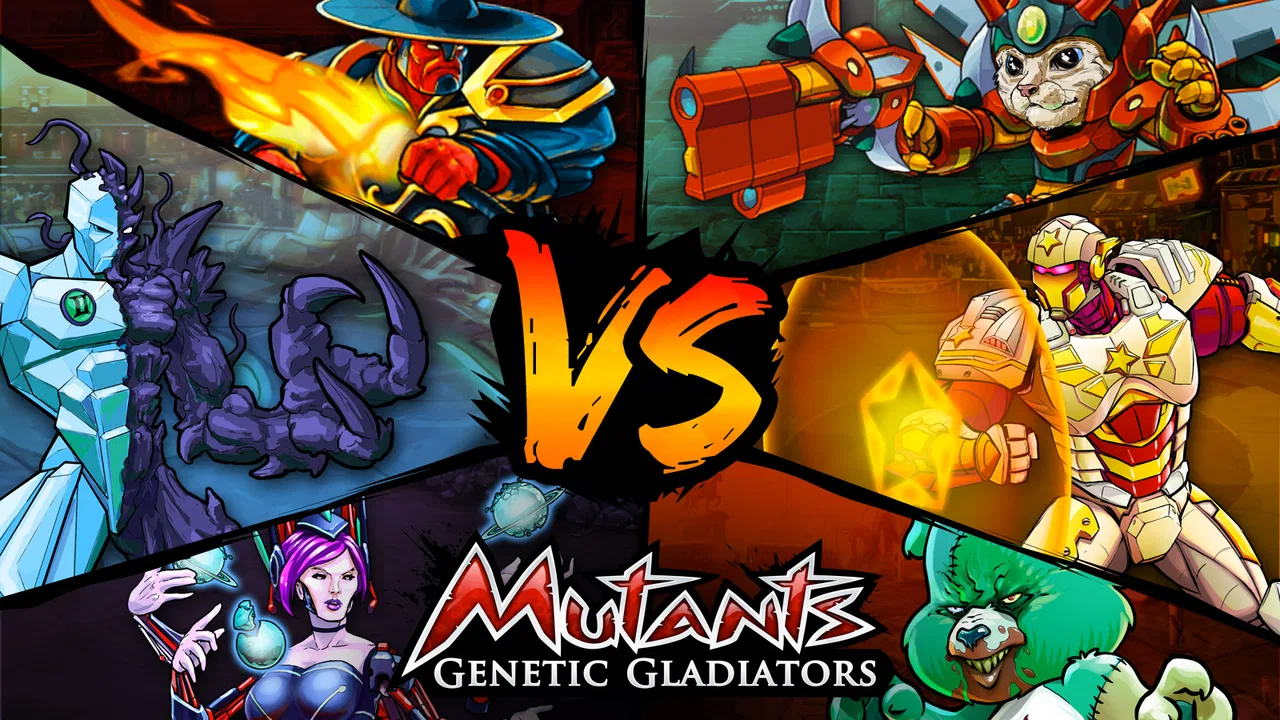
How the mutant world establishes its identity
The setting communicates its personality quickly. Mutants are not presented as ordinary fantasy heroes or realistic soldiers; they are the central language of the game. Their unusual designs give the roster a playful, slightly strange character, and that visual direction helps separate the game from more conventional military or medieval action titles.
What works for me is that the art style supports the collection loop instead of sitting apart from it. When I look at a new mutant, I am not only asking whether it looks interesting. I am also thinking about where it could fit in my team and whether it is worth investing resources into. The visual variety makes those decisions feel more personal than selecting anonymous units from a menu.
The gladiator framing also gives the battles a clear purpose. I am not wandering through a huge open world or following a heavily cinematic adventure. The focus is on preparing competitors and sending them into organized confrontations. That narrower setting keeps the game readable, although players who want exploration, environmental puzzles, or a large story campaign may find it limited.
One useful way to approach the roster is to treat it like a small toolbox rather than a gallery. A mutant that looks powerful is not automatically the best choice for every encounter. I get more value by considering the role each member plays, the weaknesses of the opposing group, and whether my strongest units are actually worth spending on at that point in progression. This prevents the common mistake of spreading upgrades across too many characters.
The breeding system is especially important to the game’s identity. It turns the roster into something I develop rather than merely unlock. That creates a satisfying sense of ownership, but it also introduces uncertainty into the process: building the team I want can take patience. Players who enjoy experimenting with combinations will probably see that as the main attraction. Players who want direct control over every result may find it less comfortable.
I also appreciate that the setting does not need a complicated explanation before I can play. The mutant theme gives the menus, battles, and collection screen a shared tone. Even when the game is asking me to manage resources or compare units, it still feels connected to the same eccentric gladiator world.
Art direction that serves the collection loop
The visual design is at its strongest when it makes progress easy to read. A growing roster feels meaningful because each mutant has its own identity, and the contrast between creatures makes team-building more engaging. I can remember why I wanted to develop a particular unit instead of seeing every character as a minor variation of the last.
That clarity matters during everyday play. If I only have a few minutes, I can open the game, inspect the state of my team, and decide whether to train, breed, or battle. The bright presentation keeps those management moments from feeling like a spreadsheet, even though careful resource decisions are still part of the experience.
There is a trade-off, though. The playful look may not appeal to someone searching for a serious or gritty action game. The Teen rating suggests that the tone is aimed at older children and adults rather than very young players, but the overall presentation remains accessible and stylized. I see it as a better match for players who enjoy exaggerated character design than for fans of realistic combat.
The art also influences pacing. Because the game emphasizes distinct mutants and team composition, I naturally pause between battles to look at my options. That pause is not wasted time; it is where much of the game’s personality lives. Still, if I want constant movement and immediate action, the collection and preparation layers can feel like interruptions.
Sound, rhythm, and the feel of a battle session
The overall mood depends on the contrast between lively presentation and deliberate preparation. I do not experience the game as a pure reflex challenge. The rhythm is closer to a cycle: check the roster, make a development decision, enter a fight, evaluate the result, and adjust the plan. That pattern gives the game a steady routine that works well in short sessions.
Sound contributes to the sense that battles are events rather than simple menu confirmations. The audio helps separate preparation from confrontation, giving the action a stronger lift when a fight begins. I would not describe the game’s appeal as being built around a dramatic soundtrack, but the sound design supports the colorful arena mood and keeps the encounters from feeling completely flat.
The pacing is one of the more important things to understand before installing it. Progress is not only about winning the next fight. I often feel that I am building toward better future fights by improving a team member, testing a pairing, or saving resources for a more useful upgrade. That makes the game comfortable for routine play, especially when I want something I can check several times during the day.
A realistic example is a commute or a break between tasks. I can use a short session to review my mutants, choose a training priority, and complete a battle without needing to remember a complicated story scene. Later, when I have more time, I can think more carefully about breeding and team balance. This split between quick maintenance and deeper planning is one of the game’s practical strengths.
On the other hand, the same rhythm can become repetitive. If I play for a long stretch while expecting constant new surprises, the loop of upgrading, assembling, and fighting may begin to feel familiar. I find it more enjoyable when I treat it as a long-term collection game instead of trying to rush through every available activity in one sitting.
The best pacing decision I made was to stop treating every battle as a test of my current strongest team. Sometimes a fight is more useful as information. I can learn which kind of lineup causes trouble, see whether a developing mutant is ready for a larger role, and avoid wasting valuable resources on a rushed upgrade. That mindset makes losses less frustrating and gives the management layer a clearer purpose.
Where the mechanics fit together—and where they resist
The core structure is easy to describe: I breed mutants, train them, assemble a team, and fight my way upward. The interesting part is how those actions compete for my attention. Training improves immediate reliability, breeding offers longer-term roster development, and team assembly determines how well those investments work together. Choosing one priority often means delaying another.
That trade-off gives the game more depth than a simple sequence of battles. I cannot assume that collecting more mutants automatically makes my squad better. A large roster can also mean more resources spread across too many projects. My practical advice is to choose a small group of dependable fighters first, then expand when the team has a clear foundation.
Team composition is where the action category becomes more than a label. The fights are connected to decisions I make before entering them. I get better results when I inspect the opposing lineup and ask what my current team lacks, rather than repeatedly sending the same arrangement into every encounter. This is a useful habit for new players because it exposes the strategic layer early.
There is also a difference between progression and power. A newly acquired mutant can be exciting, but it may not be useful immediately if I have not trained it or found the right place for it in the lineup. That means the game rewards patience. The most satisfying improvements are not always the flashiest unlocks; sometimes they are the moment when an overlooked unit finally fits a team plan.
The free-to-play structure deserves an honest look. The game is free to download, but in-app purchases range from $0.99 to $144.99 per item. I can understand why optional spending exists in a roster-building game, yet the wide range means I would approach purchases carefully. The pressure is strongest for players who want to accelerate development or avoid waiting through the slower parts of progression.
My advice is to decide early whether I am playing for experimentation or speed. If I am happy to develop a team gradually, the free entry makes it easier to enjoy the systems on their own terms. If I become focused on reaching the top as quickly as possible, the purchase structure can change the mood from strategic planning to resource pressure. That is the point where I would step back rather than spend impulsively.
Another practical issue is commitment. A game built around breeding and training is more rewarding when I return regularly, because progress accumulates across repeated decisions. Someone who only wants an occasional action game may find the long-term development less compelling. In that case, a conventional arcade fighter or a match-based action title would probably provide faster satisfaction with less management.
Compared with other squad-collection games, this one stands out through the mutant theme and the emphasis on developing unusual fighters. Compared with a traditional action game, it offers less direct control and more preparation. Compared with a pure breeding or management game, it gives the roster a clearer purpose through battles. That middle position is its main strength, but it also means it may not fully satisfy players who want only one of those experiences.
The game is also better suited to players who enjoy making imperfect choices. I will sometimes invest in a mutant because I like its design or because I want to test an unusual combination, even when another option looks more efficient. That freedom gives the roster personality. The cost is that experimentation can slow progress, so players who care mainly about efficiency should keep a tighter upgrade plan.
Small habits that make the system easier to manage
I recommend reviewing the whole team before spending resources on a single mutant. A promising upgrade is less valuable if it leaves the rest of the lineup unable to cover a basic weakness. Looking at the squad as a group also reduces the temptation to chase every new addition.
I would also separate testing from commitment. When I am curious about a new combination, I first use it to learn how the team behaves instead of immediately pouring all available resources into it. This protects progress while still allowing experimentation, and it is especially useful for players who enjoy discovering their own preferred style.
Finally, I try to match the game session to the task. Short visits work well for routine training and battle preparation, while longer sessions are better for comparing mutants and thinking through a new team. Treating every login as a major progression push makes the slower rhythm feel worse than it needs to.
Who should play it and who should move on
I think this is a good choice for someone who likes colorful creature collections but wants those creatures to matter in combat. It suits players who enjoy comparing lineups, improving a favorite roster, and returning to a team over time. The mutant theme also gives it more personality than many interchangeable squad games.
I would be more cautious recommending it to someone who dislikes in-app purchase pressure, lengthy progression, or repeated management screens. The free price makes trying it easy, but free access does not remove the need for patience. Anyone looking for a short campaign with a clear ending should probably choose a different action game.
It is also not my first recommendation for a player who wants intense real-time controls. The important decisions happen around the fight as much as inside it. If your favorite part of action games is aiming, dodging, or mastering fast manual movement, this game’s team-development focus may feel too indirect.
For families, the Teen rating is the sensible boundary to keep in mind. I would not present it as a game for very young children simply because the art is colorful. The competitive framing, mutant battles, and purchase options make it better suited to older players who can understand the difference between optional spending and necessary progression.
Android users with version 8.0 or later can run the game, and the large install base suggests it has reached a broad audience. Still, popularity alone would not decide it for me. The real question is whether I enjoy the loop of breeding, training, and adjusting a squad. If that loop sounds satisfying, the game has enough character to justify a serious try.
My atmosphere verdict after settling into the roster
What stays with me is the coherence between the mutant artwork, the gladiator setting, and the measured battle rhythm. The game does not rely on a single spectacular feature. Instead, it builds a recognizable mood around strange fighters, colorful presentation, and the feeling that every encounter is connected to the next team decision.
The strongest reason to play is the connection between collection and strategy. I am not simply gathering characters to fill a catalogue; I am trying to turn them into a group that works. That makes training and breeding feel purposeful, while the battles give me a reason to keep refining the roster.
The limitations are just as clear. Progress can be slow, the repeated loop will not suit everyone, and the in-app purchase range means I would keep a close eye on spending. The game rewards patience more than urgency, and its atmosphere works best when I accept that it is a long-term hobby rather than a quick burst of action.
After spending time with it, I would recommend Mutants Genetic Gladiators to a friend who enjoys squad-building, creature development, and colorful combat with a strategic layer. I would tell a reflex-focused player to look elsewhere, and I would warn anyone who dislikes free-to-play progression to approach carefully. For the right audience, though, Celsius online has created a distinctive action game whose art and pacing give its mechanical loop a clear identity.
My final advice is to begin slowly, develop a focused core team, and let curiosity guide experimentation without allowing every new mutant to drain your resources. Played that way, the game feels less like a race and more like building a personal stable of fighters. That is where its atmosphere, mechanics, and long-term appeal come together most convincingly.
FAQs for Mutants Genetic Gladiators
01What is Mutants: Genetic Gladiators about?
Mutants: Genetic Gladiators is a strategy and collection game in which you create, breed, and train teams of unusual mutant creatures. You combine different genetic types to discover new mutants, then use them in turn-based battles against other players and computer-controlled opponents. Progress depends on building a balanced roster, improving abilities, and choosing effective combinations for each fight.
02Is Mutants: Genetic Gladiators free to download and play?
Yes, Mutants: Genetic Gladiators can generally be downloaded and played for free on supported Android and iOS devices. However, it includes optional in-app purchases for resources, upgrades, breeding opportunities, and other conveniences. You can make progress without paying, but advancing faster or collecting certain items may require patience, regular play, or spending real money.
03Does the game require an internet connection?
An internet connection is normally required for most important features of Mutants: Genetic Gladiators. Online access is used for battles, events, account synchronization, rewards, advertisements, and server-based game content. Because of this, the game is not ideal for completely offline play. A stable Wi-Fi or mobile data connection can also help prevent interruptions during matches.
04How does breeding and team building work?
Breeding is one of the central systems in Mutants: Genetic Gladiators. You combine compatible mutants or genetic traits to produce new creatures, each with different strengths, weaknesses, and abilities. Team building is equally important because battles reward strategic choices rather than simply using the strongest mutants. Selecting suitable classes and attack types can make a major difference.
05Is Mutants: Genetic Gladiators suitable for children?
The game is presented in a colorful, cartoon-style format, but parents should still review its age rating and available settings before allowing children to play. It may contain in-app purchases, advertising, online interactions, and competitive features. To avoid unexpected charges, enable purchase restrictions on the device and discuss responsible spending if the game is used by younger players.
Pros
- Fast
- accessible battles work well for short gaming sessions.
- Large mutant roster encourages experimentation with different team combinations.
- Distinct genetic classes make matchup planning meaningful.
- Regular events and rewards provide reasons to return frequently.
- Colorful character designs give the game a playful visual identity.
Cons
- Progress can feel slow without spending premium currency.
- Energy limits may interrupt longer play sessions.
- Some battles rely heavily on team power rather than strategy.
- The number of currencies and upgrade systems can feel confusing.
- Online features require a stable connection to function properly.

Mutants Genetic Gladiators
Gallery